Nutrition for Children With Insulin Resistance: A Pediatric Endocrinologist's Guide
Helping Families Build Healthier Metabolism—One Meal at a Time
Last Medically Reviewed: June 2026
Author: Dr. Natalie Hernandez, Pediatric Endocrinologist & Metabolic and Obesity Medicine Specialist
Nutrition for Children With Insulin Resistance Starts With Understanding Metabolism
When parents learn their child has insulin resistance, one of the first questions they ask is:
"What should my child eat?"
Unfortunately, the internet often responds with conflicting advice.
Some websites recommend eliminating carbohydrates entirely.
Others promote restrictive diets that are difficult, and often unnecessary, for growing children.
The truth is much more encouraging.
Nutrition for children with insulin resistance isn't about perfection or extreme diets. It's about building eating patterns that support healthier metabolism, steady blood sugar, and lifelong wellness.
For most children, the goal isn't simply losing weight.
The goal is improving how the body responds to insulin.
When insulin sensitivity improves, many children also experience improvements in energy, appetite regulation, metabolic health, and long-term risk for conditions such as prediabetes and Type 2 diabetes.
Healthy nutrition isn't about punishment.
It's about giving a growing body the nutrients it needs to thrive.
You can learn more about insulin resistance; including symptoms, risks and treatment.
How Food Affects Insulin Resistance
Every time we eat carbohydrates, the body breaks them down into glucose.
Glucose enters the bloodstream and signals the pancreas to release insulin.
Insulin acts like a key, helping glucose move from the bloodstream into the body's cells where it can be used for energy.
With insulin resistance, the body's cells become less responsive to insulin.
To compensate, the pancreas produces more insulin.
Over time, higher insulin levels can make weight management more difficult and increase the risk of prediabetes, PMOS (formerly PCOS), and eventually Type 2 diabetes.
The goal of nutrition isn't to eliminate carbohydrates.
It's to create meals that produce steadier glucose levels and reduce the amount of insulin the body needs to release.
That's why meal quality often matters more than eliminating individual foods.
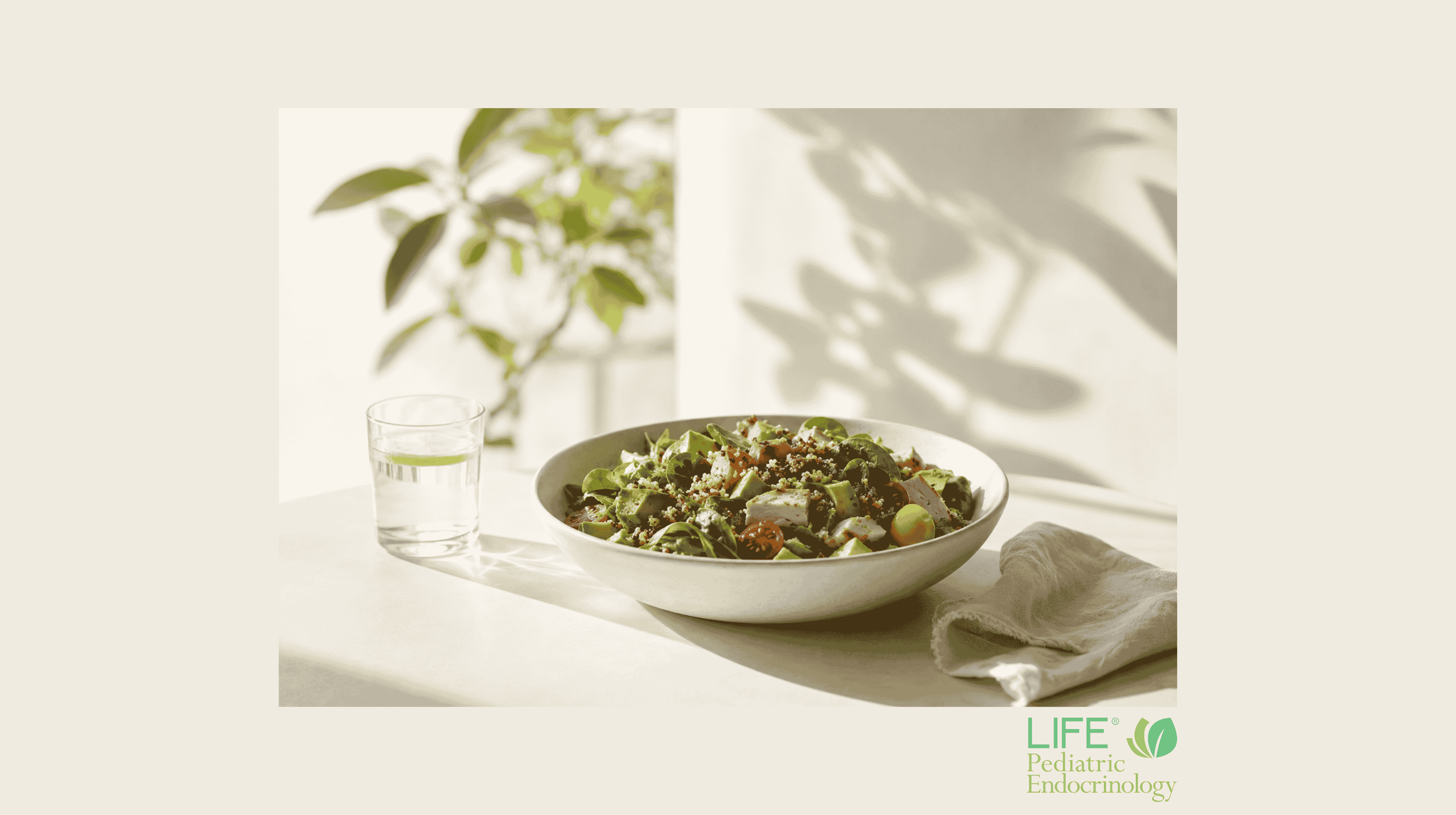
The Five Building Blocks of an Insulin-Friendly Plate
Rather than focusing on foods your child "can't have," we encourage families to focus on building balanced meals.
A simple framework makes healthy eating easier, and far more sustainable.
1. Build Every Meal Around Protein
Protein helps support:
- Healthy growth
- Lean muscle development
- Satiety (feeling full longer)
- Stable blood sugar after meals
Excellent protein choices include:
- Chicken
- Turkey
- Fish
- Eggs
- Greek yogurt
- Cottage cheese
- Tofu
- Beans
- Lentils
Including protein with meals and snacks can help reduce large post-meal glucose spikes while supporting normal growth and development.
2. Fill Half the Plate With Colorful Vegetables
Vegetables provide:
- Fiber
- Vitamins
- Minerals
- Antioxidants
Because most non-starchy vegetables have relatively little impact on blood sugar, they are an excellent choice for children with insulin resistance.
Encourage a variety of colors, including:
- Broccoli
- Bell peppers
- Cucumbers
- Carrots
- Tomatoes
- Green beans
- Spinach
- Cauliflower
The goal isn't perfection.
It's gradually helping vegetables become a regular part of family meals.
3. Choose High-Fiber Carbohydrates
One of the biggest myths about insulin resistance is that children should avoid carbohydrates altogether.
Fortunately, that's not true.
Carbohydrates provide important energy for growing bodies.
The key is choosing carbohydrates that digest more slowly and provide additional fiber.
Examples include:
- Oatmeal
- Brown rice
- Quinoa
- Sweet potatoes
- Whole-grain bread
- Beans
- Lentils
- Fresh fruit
Fiber slows digestion, helps stabilize blood sugar, supports gut health, and improves satiety.
Rather than fearing carbohydrates, focus on choosing better carbohydrates most of the time.
4. Include Healthy Fats
Healthy fats help children feel satisfied while supporting brain development, hormone production, and overall health.
Good choices include:
- Avocados
- Nuts
- Seeds
- Natural nut butters
- Olive oil
- Fatty fish such as salmon
Adding healthy fats alongside protein and fiber often creates meals that are more filling and metabolically balanced.
5. Choose Water Most Often
Sugar-sweetened beverages remain one of the largest sources of added sugar in children's diets.
Encourage water as the primary beverage throughout the day.
Other good options may include:
- Plain milk
- Unsweetened milk alternatives when appropriate
- Sparkling water without added sugar
Replacing sugary beverages with water is one of the simplest nutrition changes many families can make.
Nutrition Is About Patterns, Not Perfection
One healthy meal won't reverse insulin resistance.
One dessert won't cause diabetes.
Long-term metabolic health develops through consistent daily habits.
Children should learn that healthy eating isn't about restriction.
It's about creating eating patterns they can maintain throughout childhood, adolescence, and adulthood.
When nutrition becomes sustainable rather than stressful, healthy habits are much more likely to last.
Food Should Never Be the Enemy
One of the greatest misconceptions surrounding insulin resistance is that children must constantly avoid their favorite foods.
That simply isn't realistic, or healthy.
Children deserve birthday cake.
Pizza nights.
Holiday meals.
Family celebrations.
A healthy relationship with food is just as important as healthy nutrition.
Rather than labeling foods as "good" or "bad," focus on helping your child build balanced meals most of the time.
Consistency will always outperform perfection.
Foods Families Don't Need to Fear
Parents are often surprised to learn that many foods commonly labeled as "bad" can absolutely fit into a healthy eating pattern.
The goal isn't eliminating favorite foods.
It's creating balance.
Fruit
Fruit naturally contains carbohydrates, but it also provides:
- Fiber
- Vitamins
- Minerals
- Antioxidants
Whole fruit is very different from sugar, sweetened beverages or fruit juice.
For most children, fresh fruit is an excellent part of a healthy diet.
Potatoes
Potatoes have unfairly developed a bad reputation online.
They're actually an excellent source of:
- Potassium
- Vitamin C
- Fiber (especially with the skin)
Preparation matters.
A baked potato paired with grilled chicken and vegetables creates a very different meal than French fries and a sugary drink.
Rice and Pasta
Rice and pasta do not cause insulin resistance.
Instead of avoiding them completely, consider:
- Smaller portions
- Whole-grain varieties when possible
- Pairing them with protein and vegetables
Balanced meals often produce healthier glucose responses than carbohydrates eaten alone.
Dairy Foods
Milk, yogurt, and cottage cheese provide important nutrients for growing children.
Plain Greek yogurt, in particular, offers an excellent combination of protein and calcium while containing less added sugar than many flavored yogurts.
It's Not Just What You Eat, It's How You Eat
Research continues to show that meal composition and eating habits may influence metabolic health just as much as individual foods.
Simple strategies that often help include:
Pair Carbohydrates With Protein
Instead of eating carbohydrates by themselves, combine them with protein or healthy fats.
For example:
- Apple slices with peanut butter
- Greek yogurt with berries
- Whole-grain toast with eggs
These combinations often help children stay satisfied longer while producing steadier glucose responses.
Eat Regular Meals
Skipping meals can sometimes lead to overeating later in the day.
Most children benefit from predictable meal and snack routines that provide consistent nutrition throughout the day.
Slow Down at Mealtime
Eating more slowly gives the brain time to recognize fullness.
Families who eat together without distractions often find that children naturally become more aware of hunger and fullness cues.
Move After Meals
Physical activity is one of the most effective ways to improve insulin sensitivity.
Something as simple as:
- Taking a family walk
- Playing outside
- Riding bikes
- Shooting basketball
- Dancing in the living room
after dinner can help muscles use glucose more efficiently.
What About Sugar?
Many parents worry that sugar alone causes insulin resistance.
The reality is more complex.
Occasional sweets are not the problem.
It's the overall pattern of nutrition, physical activity, sleep, and metabolic health that matters most.
Rather than trying to eliminate every gram of sugar, focus on:
- Limiting sugar-sweetened beverages
- Reducing highly processed snacks
- Choosing whole foods more often
- Building balanced meals
Healthy eating should never become a source of fear or guilt.
Nutrition Is Only One Piece of Metabolic Health
Food is incredibly important, but it's only one part of the picture.
Children with insulin resistance also benefit from:
- Regular physical activity
- Adequate sleep
- Healthy stress management
- Physician-guided medical care when appropriate
- Treatment of underlying conditions such as PMOS (formerly PCOS) or prediabetes
This whole-body approach is what helps create lasting improvements in metabolic health.
Frequently Asked Questions (FAQ)
Can my child still eat fruit if they have insulin resistance?
Yes.
Whole fruit is rich in fiber, vitamins, minerals, and antioxidants and can absolutely be part of a healthy eating pattern.
Should children with insulin resistance avoid carbohydrates?
No.
Growing children need carbohydrates for energy.
The goal is choosing higher-fiber carbohydrates and pairing them with protein and healthy fats to create balanced meals.
Is a ketogenic diet recommended?
For most children, highly restrictive diets are not recommended without close medical supervision.
A balanced, sustainable eating pattern is generally healthier and easier to maintain over the long term.
Are artificial sweeteners better than sugar?
Artificial sweeteners may reduce added sugar intake in some situations, but they should not replace the goal of building an overall healthy eating pattern centered around whole, minimally processed foods.
The Bottom Line
The best nutrition plan for children with insulin resistance isn't built around restriction.
It's built around balance.
Balanced meals.
Balanced habits.
Balanced expectations.
Children don't need perfection.
They need consistent routines that support healthier metabolism while allowing them to enjoy food, family traditions, and childhood.
When families focus on improving metabolic health instead of chasing the "perfect diet," they create habits that can benefit children for a lifetime.
Ready to Build a Healthier Foundation?
Nutrition is one of the most powerful tools for improving insulin resistance, but every child is different.
At LIFE Pediatric Endocrinology, Dr. Natalie Hernandez helps families understand the unique metabolic factors influencing their child's health through comprehensive evaluations and personalized treatment plans.
Through the Confident Body Program, families receive physician-led care that combines nutrition, movement, behavioral coaching, and evidence-based medical therapies when appropriate to improve insulin sensitivity and support lifelong wellness.
Schedule a consultation to learn how personalized metabolic care can help your child build healthier habits and a healthier future.
Dr. Natalie Hernandez is a pediatric endocrinologist with advanced fellowship training in pediatric obesity medicine, metabolism, diabetes, and hormone health. She specializes in caring for children and adolescents with insulin resistance, prediabetes, PMOS (formerly PCOS), obesity, and other metabolic conditions through compassionate, evidence-based care.
As the physician leader of LIFE Pediatric Endocrinology's Confident Body Program, Dr. Hernandez believes that healthy nutrition should empower, not overwhelm, families. Her approach focuses on sustainable habits that improve metabolism, support healthy growth, and promote lifelong wellness.
Medical Disclaimer
This article is intended for educational purposes only and should not be interpreted as personalized medical advice. Every child has unique medical needs, and nutrition recommendations should be individualized by a qualified healthcare professional. Always consult your physician or pediatric endocrinologist regarding questions about your child's health, diagnosis, or treatment plan.
References
-
American Diabetes Association. Standards of Care in Diabetes—2025. Diabetes Care. 2025;48(Suppl 1):S283–S305. doi:10.2337/dc25-S014.
-
Neyman A, Hannon TS. Low-Carbohydrate Diets in Children and Adolescents With or at Risk for Diabetes. Pediatrics. 2023;152(4):e2023063755. doi:10.1542/peds.2023-063755.
-
Calcaterra V, Verduci E, Vandoni M, et al. The Effect of Healthy Lifestyle Strategies on the Management of Insulin Resistance in Children and Adolescents With Obesity. Nutrients. 2022;14(21):4692. doi:10.3390/nu14214692.
-
Blonde L, Umpierrez GE, Reddy SS, et al. AACE Clinical Practice Guideline: Diabetes Comprehensive Care Plan. Endocr Pract. 2022;28(10):923–1049. doi:10.1016/j.eprac.2022.08.002.
-
Hannon TS, Arslanian SA. Obesity in Adolescents. N Engl J Med. 2023;389(3):251–261. doi:10.1056/NEJMcp2102062.
-
Van Hulst A, Paradis G, Harnois-Leblanc S, et al. Lowering Saturated Fat and Increasing Vegetable and Fruit Intake May Increase Insulin Sensitivity in Children. J Nutr. 2018;148(11):1838–1844. doi:10.1093/jn/nxy189.
-
Banaszak M, Górna I, Przysławski J. Plant-Based Diets for Insulin Resistance. Nutrients. 2022;14(7):1400. doi:10.3390/nu14071400.
-
Arslanian S, Bacha F, Grey M, et al. Evaluation and Management of Youth-Onset Type 2 Diabetes. Diabetes Care. 2018;41(12):2648–2668. doi:10.2337/dci18-0052.