


Physician-Led Pediatric Obesity and Metabolic Care for Families Throughout Greater Houston
Author: Dr. Natalie Hernandez, Pediatric Endocrinologist & Metabolic and Obesity Medicine Specialist
If You're Worried About Your Child's Weight, Start Here
You've probably already had this conversation with your pediatrician, a friend, or your own search bar late at night.
Your child is eating reasonably well. They're not sedentary. You've tried cutting back on snacks, adding activity, being patient. And the number on the growth chart keeps climbing anyway.
Here's what we want Houston parents to know: this usually isn't a discipline problem, and it isn't something you caused.
Childhood weight gain is driven by a mix of genetics, hormones, insulin resistance, puberty, sleep, and metabolism — factors a family can't out-parent through willpower alone. Getting a real answer starts with a real evaluation, not another generic diet plan.
Looking for the Top Pediatric Endocrinologist for Weight Loss Near Houston?
Dr. Natalie Hernandez is a board-certified pediatrician and fellowship-trained pediatric endocrinologist specializing in pediatric obesity medicine, metabolism, diabetes, and hormone health. She leads metabolic and obesity medicine for LIFE Pediatric Endocrinology, a national concierge practice, and sees Houston-area families by secure telehealth visit or in person — in Houston itself when a family prefers, or at LIFE's standing Austin office.
Why Houston Children Gain Weight
No two children gain weight for exactly the same reason.
- Insulin resistance can quietly drive hunger and fat storage, even in kids eating a reasonably healthy diet.
- PMOS (formerly PCOS) makes weight management significantly harder for many teenage girls — and it's commonly missed for years.
- Puberty itself reshapes appetite, body composition, and metabolic rate.
- A smaller number of children have a specific genetic or hormonal driver that no amount of lifestyle change was ever going to fully resolve on its own.
Dr. Hernandez evaluates the whole child rather than treating the scale as the whole story, because two kids who look identical on paper can need very different care.
A Comprehensive Medical Evaluation, in Person or by Telehealth
Many Houston families start with Dr. Hernandez through secure video visits; others prefer to be seen in person, either in Houston when our team arranges local office space or at our standing Austin office. Either way, the evaluation itself doesn't change:
- Growth chart and weight chart review
- Medical and family history
- Nutrition and sleep assessment
- Physical activity review
- Laboratory testing, ordered through a local lab near you
- Screening for insulin resistance
- Evaluation for PMOS (formerly PCOS)
- Screening for prediabetes and other metabolic conditions
- When appropriate, genetic testing for early-onset or severe obesity
Labs get drawn locally in Houston; Dr. Hernandez reviews and discusses every result with you directly.
You Don't Have to Enroll in a Program to Get Answers
Plenty of Houston families put off reaching out because they picture signing up for a whole program, complete with a long-term commitment.
You don't have to start there.
Some families come to LIFE for the Confident Body Program — a structured, physician-led approach to pediatric metabolic health that pairs medical care with ongoing coaching. Others come in for one specific thing: bloodwork, a PMOS (PCOS) workup, an insulin resistance screen, or genetic testing for a child whose weight gain doesn't fit a typical pattern.
Dr. Hernandez will tell you plainly what she thinks your child actually needs. Often, it's a smaller ask than families expect.
When Genetic Testing Makes Sense
Most childhood obesity has multiple, ordinary, overlapping causes. Genetic testing isn't for every child — most won't need it.
It becomes worth discussing when a child has:
- Severe obesity that started very early, often before age 5
- Hyperphagia — a level of hunger that seems insatiable and doesn't match typical eating cues
- Weight gain alongside developmental delay or other unusual features
- A strong family history of severe, early-onset obesity
- Little or no response to a genuinely well-run lifestyle plan
Rare single-gene causes — including POMC, PCSK1, and LEPR deficiency, and Bardet-Biedl syndrome — are uncommon, but they're not the medical dead ends they used to be. A targeted, FDA-approved medication now exists for children as young as 2 with these specific, genetically confirmed diagnoses. Finding the actual cause can change the entire plan.
Dr. Hernandez can help you figure out whether this workup makes sense for your child.
GLP-1s and Other Medications: What Houston Parents Are Asking
This comes up in nearly every consultation, so let's be direct about it.
Two GLP-1 medications currently carry FDA approval for adolescent obesity: semaglutide (Wegovy), approved for ages 12 and up, and liraglutide (Saxenda), approved for ages 12–17. Both were studied as an addition to lifestyle treatment, not a substitute for it.
At LIFE, medication is never the starting point. We start with an evaluation, and when labs and clinical context support it, GLP-1 therapy or metformin may become part of a broader plan — with monitoring, coaching, and a clear conversation with your family before anything is prescribed. If your child doesn't need medication, we'll say so directly.
Learn more about how we approach GLP-1 medications for kids →
Could It Be PMOS (Formerly PCOS)?
For teenage girls, weight that won't respond to reasonable effort sometimes has an underlying explanation: PMOS, formerly known as PCOS.
Irregular periods, acne, excess hair growth, and treatment-resistant weight gain can all point toward it. It's frequently overlooked in adolescence because the symptoms get chalked up to "normal teenage stuff."
Dr. Hernandez screens for PMOS as part of a full weight evaluation. Read more about recognizing PMOS symptoms in teens →
How Fast Should a Child Safely Lose Weight?
This is one of the most common questions Houston parents ask us, and it deserves a careful answer, not a number off the internet.
For children who are still growing, the goal usually isn't rapid weight loss at all. Often, the real target is slowing the rate of weight gain while height catches up, which improves a child's growth trajectory over time without any crash-diet approach. For teens closer to their adult height, a more direct, gradual weight-loss goal can be appropriate.
The right pace depends on age, growth stage, overall health, and the underlying cause. That's a physician's call, made with your child's actual data in front of them — not a generic formula. Rapid or unsupervised weight loss in a still-growing child can cause real harm.
Why Houston Families Choose LIFE Pediatric Endocrinology
Families throughout Houston, River Oaks, Memorial, West University, The Heights, Bellaire, Katy, Sugar Land, and The Woodlands choose LIFE Pediatric Endocrinology because they want more than a generic weight-loss program, with a level of physician access and continuity they can't find locally, by video, or in person when they'd rather be seen face-to-face.
Our concierge model provides:
- Direct physician access by telehealth or in person, with visits available in Houston by arrangement and at our standing Austin office
- Extended, unhurried appointments
- Personalized treatment plans grounded in real lab work, drawn locally
- Proactive follow-up, not just a prescription and a goodbye
- Comprehensive metabolic and hormonal evaluation
- Evidence-based, physician-led pediatric endocrine care
By limiting patient volume, we're able to give families the continuity and attention that's difficult to find in traditional healthcare settings, in Houston or anywhere else.
Frequently Asked Questions (FAQ)
Do you have an office in Houston? Not a standing location, but in-person visits are available in Houston. Dr. Hernandez is licensed in Texas and sees Houston-area families by secure telehealth visit or in person — our physicians travel to Houston and arrange local office space as needed, and labs can be drawn at a lab near you. Our standing Austin office is also available for families who'd rather visit there.
Does my child need a referral? No. Families are welcome to schedule a consultation directly.
Do we have to enroll in the Confident Body Program? No. Some families join the full Confident Body Program; others come for a single evaluation, PMOS workup, or genetic testing without enrolling in a formal program. Dr. Hernandez will recommend what actually fits your child.
Will my child need a GLP-1 medication? Not necessarily. Lifestyle treatment remains the foundation of care. When medically appropriate, FDA-approved GLP-1 medications like semaglutide (Wegovy) or liraglutide (Saxenda) may be recommended as one part of a comprehensive plan, never as a first step, and never without monitoring.
Is genetic testing right for my child? For most children, no, most childhood weight gain has several ordinary, overlapping causes. Genetic testing is most useful for children with very early, severe, or unexplained weight gain, especially alongside intense, hard-to-satisfy hunger. Dr. Hernandez can help you decide if it's worth pursuing.
Could my daughter's weight be related to PMOS (PCOS)? It's possible. Irregular periods, acne, excess hair growth, and treatment-resistant weight gain can all be signs of PMOS, and it's commonly missed in adolescence. A comprehensive evaluation includes screening for it.
How is LIFE different from other pediatric weight-loss programs in Houston? We're led by pediatric endocrinologists, not a generalized weight-loss clinic, and we bring that same physician-led evaluation to Houston families in person or by telehealth. We look for the underlying medical and metabolic causes of weight gain — insulin resistance, PMOS, prediabetes, hormonal conditions, and occasionally single-gene causes — rather than starting and stopping with calories.
Ready to Take the Next Step?
If your child is dealing with obesity, insulin resistance, PMOS, prediabetes, or weight gain that doesn't add up, an early evaluation can change the trajectory — by video, or in person if you'd rather.
Dr. Natalie Hernandez provides physician-led metabolic and endocrine care to families across Texas, combining advanced pediatric endocrinology with personalized nutrition, behavioral coaching, and evidence-based medical therapy when it's truly needed.
Schedule a consultation to find out what your child actually needs — whether that's the full Confident Body Program or a single conversation to start.
Meet Your Physician
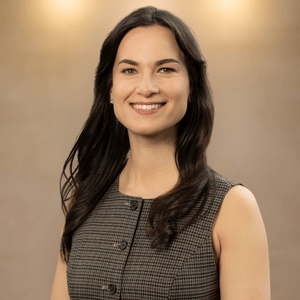
Dr. Natalie Hernandez
Dr. Natalie Hernandez is a pediatric endocrinologist with advanced fellowship training in pediatric obesity medicine, metabolism, diabetes, and hormone health. As physician leader of LIFE's Confident Body Program, she specializes in childhood obesity, insulin resistance, PMOS (formerly PCOS), prediabetes, and other complex metabolic conditions, and is licensed to see patients throughout Texas by telehealth or in person.
Getting Care in Houston
LIFE Pediatric Endocrinology provides physician-led pediatric weight loss and metabolic care to families throughout Houston, River Oaks, Memorial, West University, The Heights, Bellaire, Katy, Sugar Land, The Woodlands, and the greater Houston area — by secure telehealth visit, with labs drawn locally, or in person, with our Texas physicians traveling to Houston and utilizing local office space as needed.
You May Also Like
Share this

Miami Pediatric Weight Loss: Physician-Led Care for Kids & Teens

Austin Pediatric Weight Loss: Physician-Led Care for Kids & Teens